
FACULTY

Leonardo Bargigli is Associate Professor in Economics and Director of the bachelor’s degree program in Economics and Business at the University of Florence. He obtained his Ph.D. in Telematics and Information Society at the University of Florence, Department of Electronics and Telecommunications. His research activity is mainly focused on network theory, agent-based models, statistical methods and econometrics.

Leonardo Boncinelli is Professor of Political Economy at the University of Florence, Coordinator of the PhD in Social Sciences for Sustainability and Wellbeing, Director of the Research Center on Games for Social Change. His research expertise includes game theory, behavioral economics, bounded rationality and evolutionary theories. He has recently worked on behavioral public policies, game-based learning, gamification, online experiments and through chatbots.
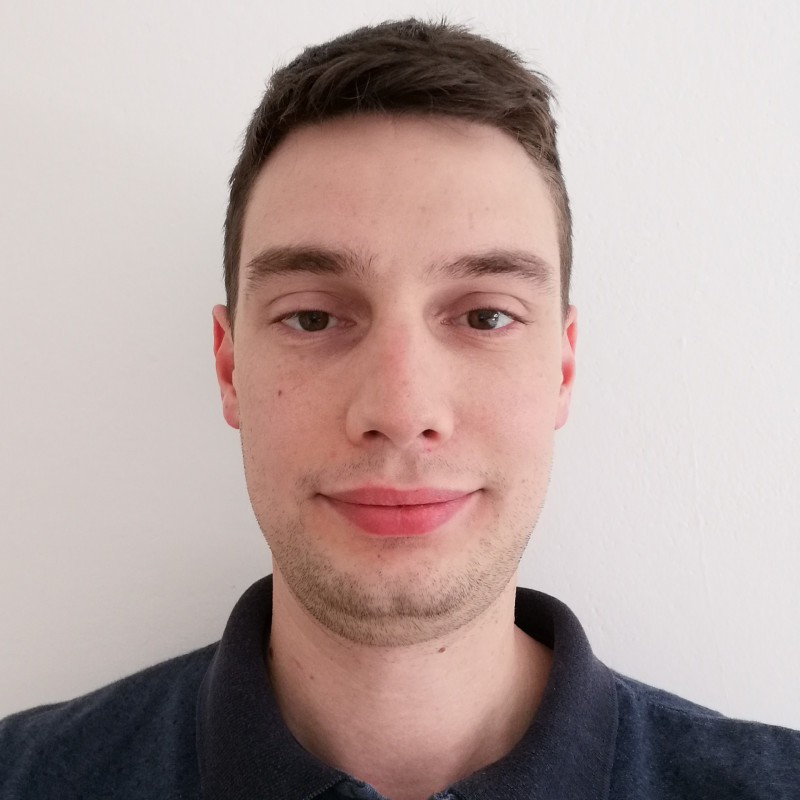
Emanuele Ciola is Assistant Professor in Economics at the University of Florence. He earned a joint PhD in Economics from the Università Politecnica delle Marche (Italy) and the Universitat Jaume I (Spain) in 2019. He contributed to the development of the Multi-Agent model for Transition Risks (MATRIX) at the Fondazione Eni Enrico Mattei. His research spans macroeconomic theory, agent-based models, real-financial market interactions, energy economics, energy transition, and network theory.

Corrado Di Guilmi is Associate Professor at the University of Florence. He is co-director of the program in Behavioral Macroeconomics and Complexity at the Centre of Applied Macroeconomic Analysis at the Australian National University and Research Fellow at the Center for Computational Social Science, Kobe University. His research mainly focuses on computational, labor, and financial macroeconomics.

Tiziano Distefano is a researcher (Rtd-b) at the Department of Economics of the University of Florence. He is Principal Investigator of the PRIN PNRR “MUST4Water” project. He organized various conferences and summer schools in collaboration with the European Society of Ecological Economics and created, in collaboration with the Il BO Live magazine of the University of Padua, the podcast “Back to the future: talks on Ecological Economics”. His main research interests include ecological macroeconomics, climate change and water resources, system dynamics, input-output, network theory and epistemology.

Gianluca Iannucci is Assistant Professor (with tenure) of Mathematical Economics at the University of Florence (Italy) where he earned a PhD in Economics. His research focuses on dynamical systems theory and dynamic games applied to environmental issues, specially emission permits market, demand for insurance, and groundwater management. He has published in academic journals such as Science, Energy Economics, Environmental and Resource Economics, Dynamic Games and Applications, Annals of Operations Research.
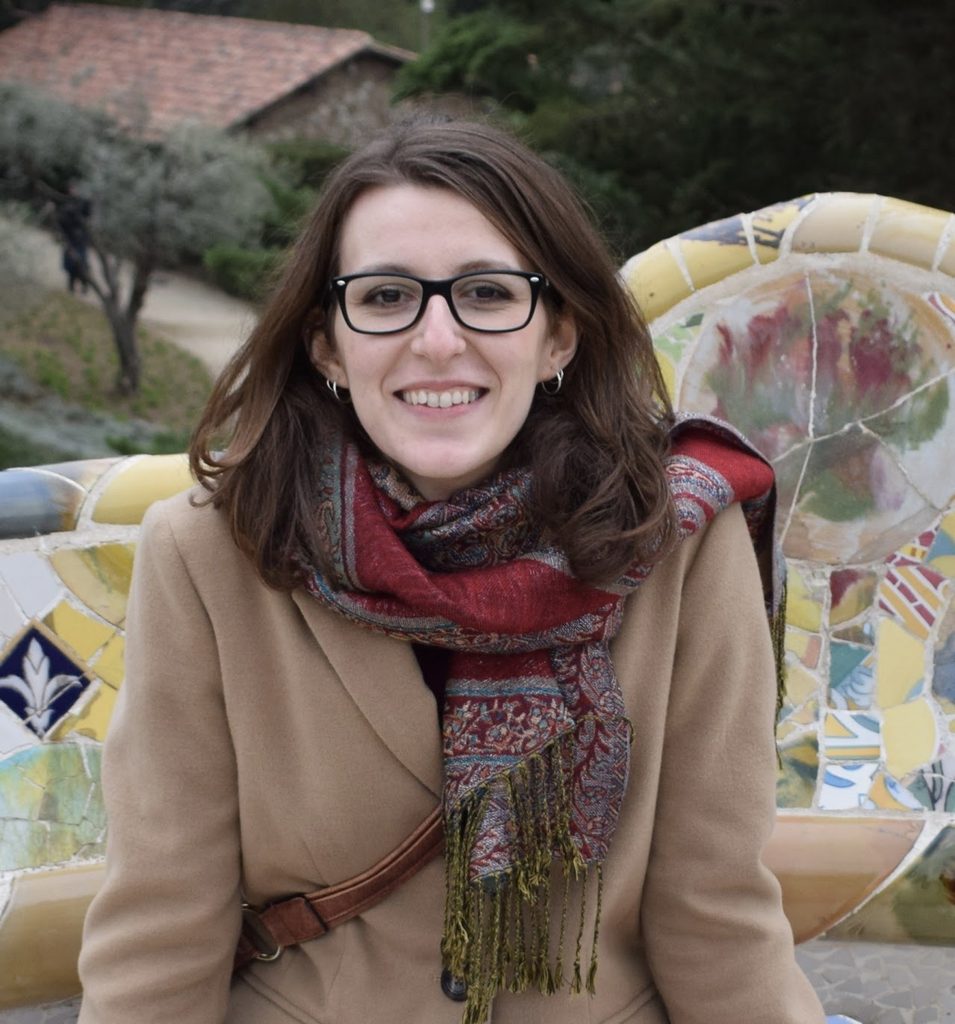
Silvia Leoni is an Assistant Professor of Public Economics at the Department of Economics and Management of the University of Florence. She is the Principal Investigator of the FIS3 starting grant project AMUSED (Agent-Based Modelling of University Enrollment Decisions). Her research primarily focuses on higher education decisions and agent-based models. She also applies computational simulations to address contemporary challenges in environmental economics, lobbying dynamics, and public health systems. She holds a Ph.D. in Quantitative Methods for Economic Policy from the University of Macerata. Prior to joining the University of Florence, she held academic and research positions at Maastricht University and the University of Leicester.

Giorgio Ricchiuti holds the position of Associate Professor of Political Economy at the University of Florence (Italy) and is a fellow at the Complexity Lab in Economics. Additionally, he serves as an adjunct professor at Catholic University in Milan. Giorgio completed his undergraduate studies in Economics at Bocconi University (Milan, Italy) and earned a PhD. in Development Economics from the University of Florence. His research focuses on dynamic models involving heterogeneous agents and network analysis.

Vincenzo Valori Professor of Experimental and Behavioural Economics. With an M.Sc. in Economics from the University of Florence and a Ph.D. in Applied Mathematics from the University of Pisa, he has been Professor of Economics and Mathematics at the Universities of Florence, Pisa, Siena and Konstanz (Germany) and is currently the Coordinator of BEELab+, the Behavioural and Experimental Economics Laboratory at the University of Florence. His research interests include the study of models of economic dynamics with heterogeneous agents, learning and expectation formation. In the past he has also worked on auction theory, asymmetric information and reputation in online markets.
PHD STUDENTS

Lorenzo Biondi is a PhD student in Economics in the joint doctoral programme of the Universities of Siena, Florence, and Pisa. He holds a double master’s degree in economics from the Universities of Florence and Bamberg. His research interests include macroeconomics, expectations, and heterogeneous agents, with particular attention to how inequality shapes macroeconomic dynamics and the transmission of monetary and fiscal policy, and how these policies affect income and wealth distribution. He is also interested in econometric and computational methods, including agent-based models and applications of large language models to economic research.
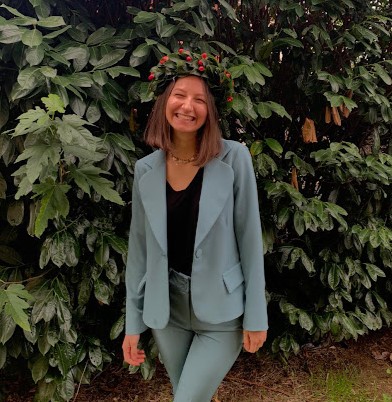
Emma Fantappiè is a PhD candidate in Economics at the joint degree programme of the Universities of Siena, Florence and Pisa. Her research lies at the intersection of labour economics and family economics, with a particular interest in gender gaps in the labour market and the design of family policies. Using both applied microeconometric methods and theoretical modelling, she studies how parental leave policies affect women’s labour market outcomes, and how social interactions and peer effects shape the diffusion of leave-taking behaviour over time.

Ben Haidari Ben Haidari is a PhD researcher at the University of Siena. He holds an MSc in Sustainable Finance from Maastricht University and an MSc in Economic Policy from Utrecht University, where he also spent a year conducting anthropological research. His research interests include political economy, political philosophy and the philosophy of economics. His doctoral research develops a values-based framework of behaviour for policy analysis that embeds economic structure with individual motivations and social relations.